
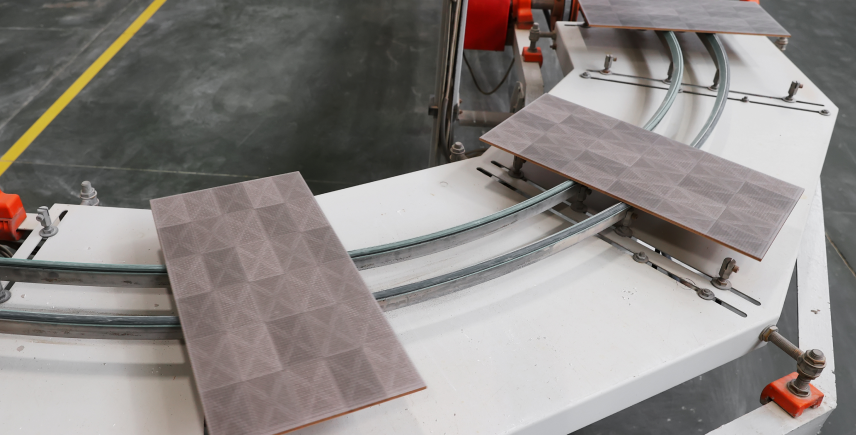
Ceramic tiles have been an essential part of architectural and interior design for centuries. From the handcrafted tiles of ancient civilizations to today’s technologically advanced, digitally printed designs, the ceramic tile industry has undergone a remarkable transformation. keda Group, a leading manufacturer in the industry, has embraced innovation while maintaining the essence of traditional craftsmanship.
The Early History of Ceramic Tiles
- The first known ceramic tiles date back to Mesopotamian and Egyptian civilizations over 4,000 years ago.
- Romans and Greeks refined tile-making techniques, incorporating mosaics into grand structures.
- During the Islamic era, intricate geometric patterns and floral motifs became prominent in tile design.
Industrial Revolution and Mass Production
- The 19th century saw the introduction of mechanized tile manufacturing, making high-quality tiles widely available.
- In the 20th century, porcelain tiles gained popularity due to their durability and water resistance.
Technological Advancements in the Modern Era
- Digital printing technology allows manufacturers to create hyper-realistic textures resembling natural stone, wood, and concrete.
- Nano-coating and anti-bacterial tiles provide hygienic solutions for hospitals, homes, and commercial spaces.
- Sustainable manufacturing focuses on eco-friendly materials and energy-efficient production.
keda Group’s Contribution to Innovation
- State-of-the-art production facilities equipped with cutting-edge machinery.
- Automated precision techniques for enhanced durability and aesthetic appeal.
- Sustainable manufacturing processes to minimize environmental impact.